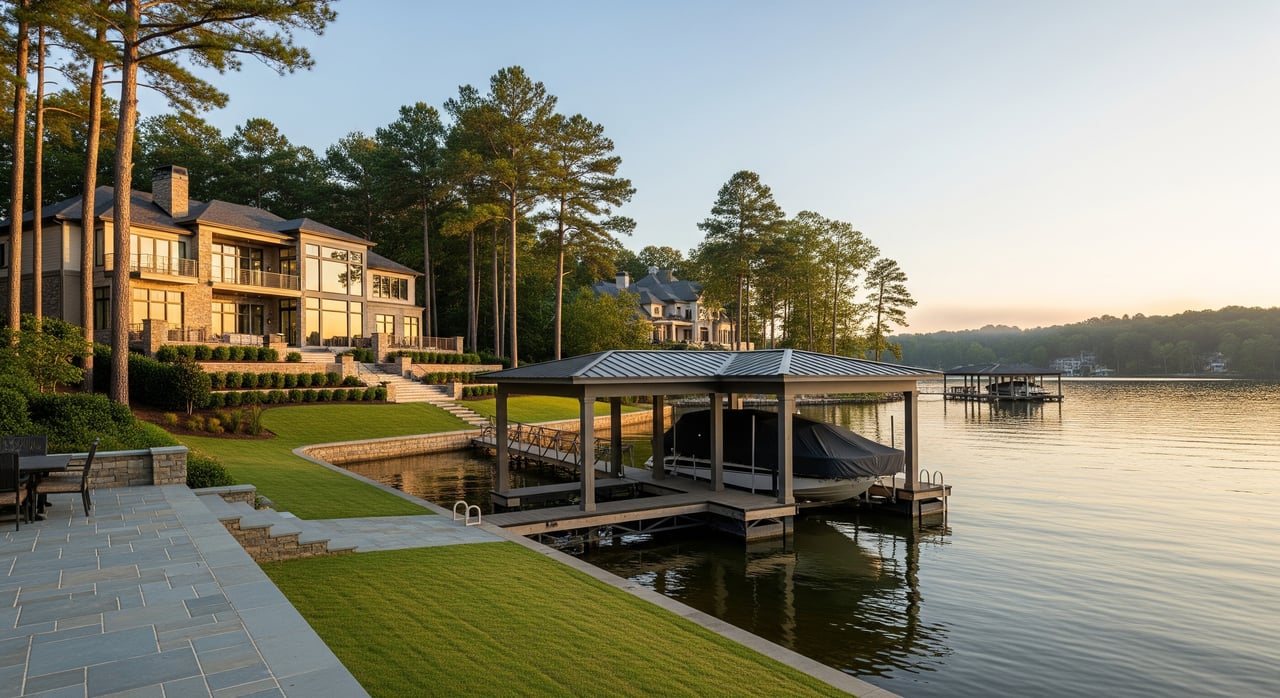
Thinking about living by Lake Norman but not sure if true lakefront or near-lake fits you best? You want the views, the access, and the right long-term value without surprises. In this guide, you’ll see how ownership, slips, permits, insurance, and resale differ in Cornelius so you can choose with confidence. Let’s dive in.
Lakefront in Cornelius explained
Lakefront, or riparian, property in Cornelius means your recorded lot line touches the lake. You may have private shoreline and, in many cases, a private dock. Your right to access the water exists, but it is subject to recorded easements, HOA rules, and Duke Energy’s shoreline management requirements.
What you own and control
You control the upland and private shoreline area within your lot, but any dock or boathouse sits within Duke Energy’s managed lake area. You must follow their rules for structures, size, placement, and materials. Always check the deed, plat, and any easements that could affect where a dock can go or how it can be used.
Everyday living experience
You get direct access to the water, big-sky views, and the ability to launch from your own property. You also take on dock upkeep, shoreline stabilization, and periodic inspections if required. Before you buy, ask for recent maintenance records, including any repairs to rip-rap, bulkheads, or boat lifts.
Near-lake living options
Near-lake homes sit off the water but close enough to enjoy the lake lifestyle. Some offer views from higher elevations. Others belong to neighborhoods with trails, common areas, or community docks. You do not have private shoreline, so access depends on neighborhood amenities or nearby marinas and ramps.
Access without the shoreline
Many near-lake communities include shared amenities, such as walking paths to a common dock or a small marina. These features are governed by HOA policies. If you plan to keep a boat, confirm how slips are assigned and whether there is a waitlist.
Lifestyle benefits and tradeoffs
Near-lake homes often provide a lower entry point with less shoreline maintenance. You can still enjoy sunsets, paddle out from a community area, or keep your boat in a slip if available. The tradeoff is relying on HOA policies or public ramps rather than private, on-property access.
Deeded slips vs assigned or community slips
A deeded slip is typically conveyed by deed or long-term easement and recorded in county records. It often transfers with the home and can, in some cases, be sold separately. An assigned or community slip is owned by the HOA or a marina entity and allocated by policy. It is not individually deeded to a homeowner.
Why this distinction matters
A deeded slip offers security and transferability. It can add meaningful value because it provides long-term access independent of HOA reassignment policies. An assigned slip depends on HOA rules, waitlists, and boat-size limits, and those policies can change over time. Fees, maintenance obligations, and insurance requirements also differ.
How to verify a slip
Ask for the recorded deed or easement that ties the slip to the property, or confirm the separate parcel ID if one exists. Review HOA CC&Rs, bylaws, and marina policies for assignment rules and fees. A title search is the best way to confirm what you are actually buying and how it will be insured at closing.
Value and resale patterns
Waterfront homes typically command a premium because they are scarce and offer direct access and views. In Cornelius, the size of that premium varies with shoreline length, water depth at the dock, view quality, lot topography, the age and condition of the home, and whether a deeded slip is included. Inventory also swings seasonally, and true lakefront supply is limited, which can affect pricing and days on market.
Factors that influence pricing
- Shoreline and view: Long shoreline, wide cove or open-water vistas, and good water depth increase desirability.
- Dock quality: Permitted, well-maintained docks and lifts reduce buyer risk and tend to support value.
- Home condition: Updated systems, well-planned outdoor spaces, and thoughtful renovations matter.
- Access rights: Deeded slip vs assigned slip can be a key differentiator for both price and liquidity.
- Carrying costs: HOA dues, marina fees, and tax treatment for deeded slips impact total ownership cost.
Permits, docks, and shoreline rules
Duke Energy manages Lake Norman’s shoreline through a Shoreline Management Plan. Most structures in or over the water require Duke Energy approval before installation or replacement. You will often need Town of Cornelius and Mecklenburg County permits as well.
Key steps and guardrails
- Do not assume an existing dock is grandfathered. Request the Duke permit history and any local permits.
- Expect limits on structure size, dock placement, covered slips, and boathouses in some areas.
- Shoreline stabilization, vegetation work, and seawalls often require prior approval.
- Unsafe or non-compliant structures can be flagged for repair or removal.
Insurance, flood, and utilities
Some lakefront parcels fall within FEMA-mapped flood zones. If a property is in a Special Flood Hazard Area, a lender will require flood insurance. Even outside high-risk zones, waterfront exposure can affect premiums, and docks or boat lifts may need separate coverage or endorsements.
Septic systems, setbacks, and erosion control can influence where you build, expand, or place a dock. Lake level changes managed by Duke Energy can affect seasonal dock usability and shoreline wear, so ask about historical conditions and any recent stabilization projects.
Buyer checklist before you write an offer
Use this quick, practical checklist to protect your timeline and budget.
- Title and ownership
- Confirm the lot is riparian if marketed as lakefront. Review the deed and plat.
- For slips, verify deeded status, recorded easement, or separate parcel ID.
- Identify any shoreline easements or restrictions that limit dock placement or size.
- Permits and approvals
- Request Duke Energy shoreline permits for any existing dock or boathouse.
- Confirm local permits from the Town of Cornelius and Mecklenburg County, if applicable.
- Verify that all structures are legal and permitted.
- HOA and marina rules
- Obtain CC&Rs, bylaws, slip assignment policies, fee schedules, and reserve studies.
- Ask about boat-size limits, waitlists, transfer rules at resale, and guest slip policies.
- Physical condition and inspection
- Inspect the dock for structural integrity, permitted materials, and lift function.
- Evaluate shoreline stability, rip-rap or bulkhead condition, and recent repairs.
- Insurance and flood
- Check FEMA flood zone status and request insurance quotes early.
- Ask about prior claims related to flooding or shoreline damage.
- Operational questions
- Confirm water depth at the dock, proximity to no-wake zones, and nearby ramps or fuel.
- Understand seasonal maintenance needs and any low-water impacts.
- Resale and taxes
- Determine how a deeded slip appears on the tax roll and how it is insured at closing.
- Review comparable sales and days-on-market trends by property type.
- Legal counsel and closing
- Have the title company review recorded easements and any Duke agreements.
- For deeded slips, confirm how the slip will be conveyed and insured.
Which lifestyle fits your goals
- You boat often and host frequently
- Lakefront or a near-lake home with a deeded slip maximizes convenience and resale.
- You enjoy the lake but prefer lower upkeep
- Near-lake with a community dock can deliver lifestyle benefits with fewer maintenance tasks.
- You value long-term flexibility
- A deeded slip, whether on-lot or off-site, provides stability even if HOA policies change.
- You are price-sensitive but want access
- Near-lake neighborhoods within a short drive of ramps or marinas can be a smart entry point.
Selling strategy tips for each property type
- Selling a lakefront home
- Highlight permitted shoreline improvements, water depth at the dock, and any recent stabilization. Provide Duke Energy and local permit records up front. Use targeted pre-market exposure to attract qualified buyers. Compass Concierge can prepare the home and dock areas to present at their best.
- Selling near-lake with a deeded slip
- Document the deeded slip clearly in marketing and title work. Showcase the convenience of secure access with lower shoreline maintenance. Private Exclusives can build early demand while protecting privacy.
- Selling near-lake with assigned or community access
- Present current HOA policies, waitlists, and fee schedules. Feature neighborhood amenities and walkability to the lake. Small pre-list updates, funded through Concierge where eligible, can lift presentation and reduce time on market.
Ready to compare Cornelius options?
If you want a calm, data-informed plan, you are in the right place. Whether you are weighing true lakefront, a home with a deeded slip, or a near-lake neighborhood, you deserve clear answers and a precise process from search to closing. Connect with Andy Nock to map your options, tour the right homes, and move forward with confidence.
FAQs
What is the difference between lakefront and near-lake in Cornelius?
- Lakefront lots touch the water and may allow private docks subject to rules, while near-lake homes sit off the shoreline and rely on community amenities or marinas for access.
How do deeded boat slips work for Lake Norman buyers?
- A deeded slip is recorded in county records and typically transfers with the home, while an assigned slip is controlled by the HOA or marina and follows their policies.
Can you build or replace a dock on Lake Norman in Cornelius?
- You usually need Duke Energy shoreline approval and local permits; never assume an existing structure is grandfathered without documentation.
Are waterfront homes harder to insure or finance in Cornelius?
- They can be if the property sits in a FEMA Special Flood Hazard Area, which triggers lender-required flood insurance and may increase premiums.
If a neighborhood has a community dock, do you always get a slip?
- No, access depends on HOA rules such as assignment methods, waitlists, boat-size limits, and transfer policies at resale.
Do changing lake levels affect dock use on Lake Norman?
- Yes, water levels managed by Duke Energy can fluctuate seasonally, which may impact dock usability and shoreline maintenance needs.