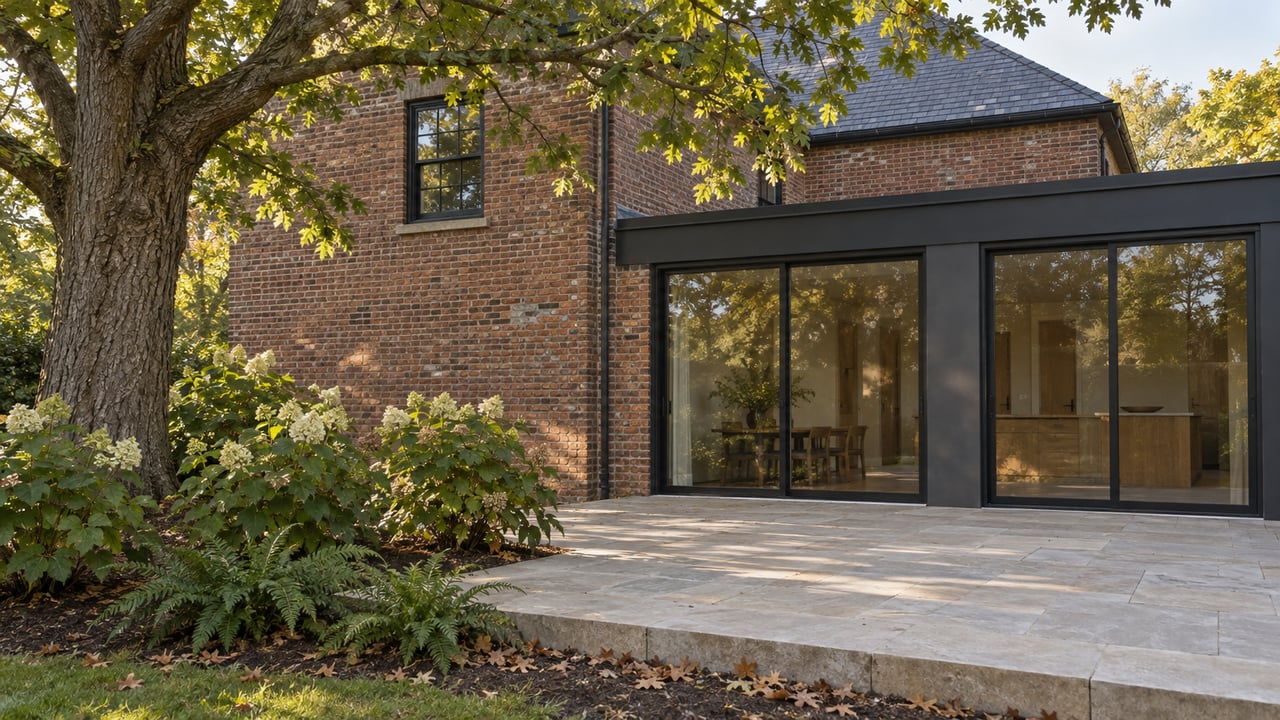
Which approval do you think stops a Myers Park renovation first: the historic district or the tree in the side yard? Most buyers assume it's whichever one shows up on the property disclosure. In practice, it's usually the one nobody mentioned until the contractor walked the lot.
Myers Park sells on its bones: the curving streets, the century of willow oaks meeting overhead, the Georgian Revival and Tudor houses that look untouched since the 1920s. Those same features are the reason a straightforward kitchen bump-out or primary suite addition here runs through two separate approval processes that don't run on the same clock and don't answer to the same authority. Understanding how they interact, and in what order, is the difference between a renovation timeline that holds and one that gets redrawn twice.
The Building Permit Isn't The First Approval You Need
In most Charlotte neighborhoods, a homeowner sketches an addition, hires an architect, and applies for a permit. Myers Park adds a step in front of that one. According to Charlotte Home Addition, because the neighborhood is a designated historic district, any exterior addition has to clear the Charlotte Historic District Commission before Mecklenburg County will issue a building permit at all. The design has to be developed to the Commission's standards first, then submitted for permit, not the other way around.
The Commission isn't rubber-stamping paperwork. It evaluates additions for compatibility with the surrounding historic context, and its standards for scale, materials, window proportions, and roofline treatment are specific enough that they have to be built into the design from day one. A buyer who falls for a Colonial Revival on Granville Road or a Tudor on Roswell Avenue and assumes the addition can be finalized after closing is setting up a second design cycle. The homes clustered along Queens Road, near the Duke Mansion on Hermitage Road and the stone Gothic Revival of Myers Park United Methodist Church at Queens and Providence, sit inside a review framework that treats rooflines and window proportions as load-bearing decisions, not finishing touches.
The Second Approval Is Standing In The Yard
Clearing historic district review doesn't clear the lot. Charlotte's tree ordinance runs independently of the Historic District Commission, and in Myers Park it often does more to shape where an addition can physically sit than the design review does. The mature willow oaks and pin oaks along Queens Road and the neighborhood's side streets create site conditions that affect exactly where an addition can be placed and how construction access is managed. A protected tree on or adjacent to the property can limit the excavation footprint and require an arborist review before foundation work begins, regardless of what the Commission has already approved on paper.
According to Heartwood Tree, under the city's ordinance, a heritage tree is any tree with a trunk diameter of 30 inches or more measured at breast height, a threshold that a lot of hundred-year-old oaks in this neighborhood clear without much trouble. Removing one, even a healthy one, requires a separate permit and a replacement commitment. This is the approval most buyers never budget for, because it isn't triggered by the house at all. It's triggered by what's already growing next to it.
Why The Floor Plan You Want To Fix Was Built To Be Fixed
Part of what makes this friction unavoidable rather than a rare edge case is the age of the housing stock itself. A Colonial Revival built in the 1920s on Granville Road or a Tudor on Roswell Avenue was designed with a kitchen tucked into a rear service wing and a primary bedroom that shared bathroom access with the rest of the house, organized around formal entertaining rather than the open daily living most buyers expect now. That gap between original layout and modern expectations is exactly why additions are such a common request here, and exactly why the two-approval sequence matters so much. The homes most likely to need a rear addition or a reconfigured primary suite are the same homes sitting on the oldest, most heavily canopied lots, where a tree save area is most likely to sit right where the addition wants to go.
What This Actually Costs When A Willow Oak Is In The Way
The numbers are worth knowing before an offer goes in, not after. Removing a healthy heritage tree in Charlotte requires a permit application fee of $265 and a separate removal fee of $500, putting the minimum cost at $765 before any mitigation is factored in, and that figure doesn't include the actual cost of taking the tree down. Because young replacement trees start with almost no canopy, GoTreePros says the city typically requires two to five replacement plantings for every heritage tree removed, sized to reach meaningful canopy over time. Where a lot is too small or too built-out to accommodate that much new planting, homeowners can instead pay a calculated fee into the city's tree fund, which finances replanting elsewhere in Mecklenburg County.
| Cost or requirement | Amount |
|---|---|
| Heritage tree permit application | $265 |
| Heritage tree removal fee | $500 |
| Minimum combined cost (before removal labor) | $765 |
| Typical replacement plantings per tree removed | 2 to 5 |
| Alternative to on-site replacement | Fee paid into city tree fund |
None of this replaces the historic district review. It runs alongside it, on its own approval track, with its own fee schedule and its own definition of what counts as protected.
The Order That Saves You A Redesign
The sequence that avoids a costly do-over looks something like this. Walk the lot with an arborist before finalizing an addition footprint, so the design accounts for any tree with a trunk near or over 30 inches in diameter. Develop the addition to Historic District Commission standards from the first sketch, since a design that has to be reworked after a Commission review costs more in time than it would have cost to get right the first time. Confirm with the city's Urban Forestry division whether a specific tree on the property is already designated, since that status doesn't always show up in a listing or a disclosure. Budget the heritage tree permit, removal fee, and replacement obligation into the renovation number before waiving a due diligence period, not after.
None of this is a reason to avoid a Myers Park renovation. It's a reason to sequence one correctly, because the neighborhood's regulatory stack rewards buyers who plan for both approvals from the start and penalizes the ones who assume the building permit is the only signature they need.
Buying or renovating a historic Myers Park property comes with more moving pieces than the listing photos suggest, and getting the sequence right before you write an offer is worth more than getting it right after. If you're evaluating a specific Myers Park property with renovation in mind, Andy Nock can help you understand what a lot's tree canopy and historic district status mean for your plans before you're locked into a contract.
This article is general information, not legal, tax or financial advice. Consult a qualified professional about your situation.